— work · 2026-05-16
Tokio-Wohnbogen 1955
This morning at the Hibiya Okuroji: railway viaduct from 1910, three generations of brick repair visible in the mortar joints, bars and wine shops fitted inside the arches because the arches were there first.
That sequence. Infrastructure built for one purpose, later inhabited for another. Is where this work begins. But it inverts the sequence.
Tokio-Wohnbogen 1955 asks: what if the arch had been the first idea, not the leftover one? Not a railway substructure adapted for retail. A residential building conceived entirely as stacked barrel vaults. Brick, 4.8 meters wide, 4.2 meters to the crown. Cut directly into a Tokyo hillside during the postwar reconstruction years. No applied facade. Windows punched through the masonry wherever the program required. The arch is the room.
This is not a building that existed. The construction logic would have been possible. Brick masons were available, the geometry is simple, the material was cheaper than early reinforced concrete in the reconstruction years. But it wasn’t built this way. Someone chose poured concrete instead, and the barrel vault stayed inside the railways.
Two views.

The exterior: five stacked tiers cut into a Tokyo hillside. Morning light raking across the brick face, warm Meiji-red Klinker from 1910-era sources. Laundry between the arch piers. A vegetable plot at ground level. The building has no architect’s name and no signage. It never needed one, it was never designed to announce itself.
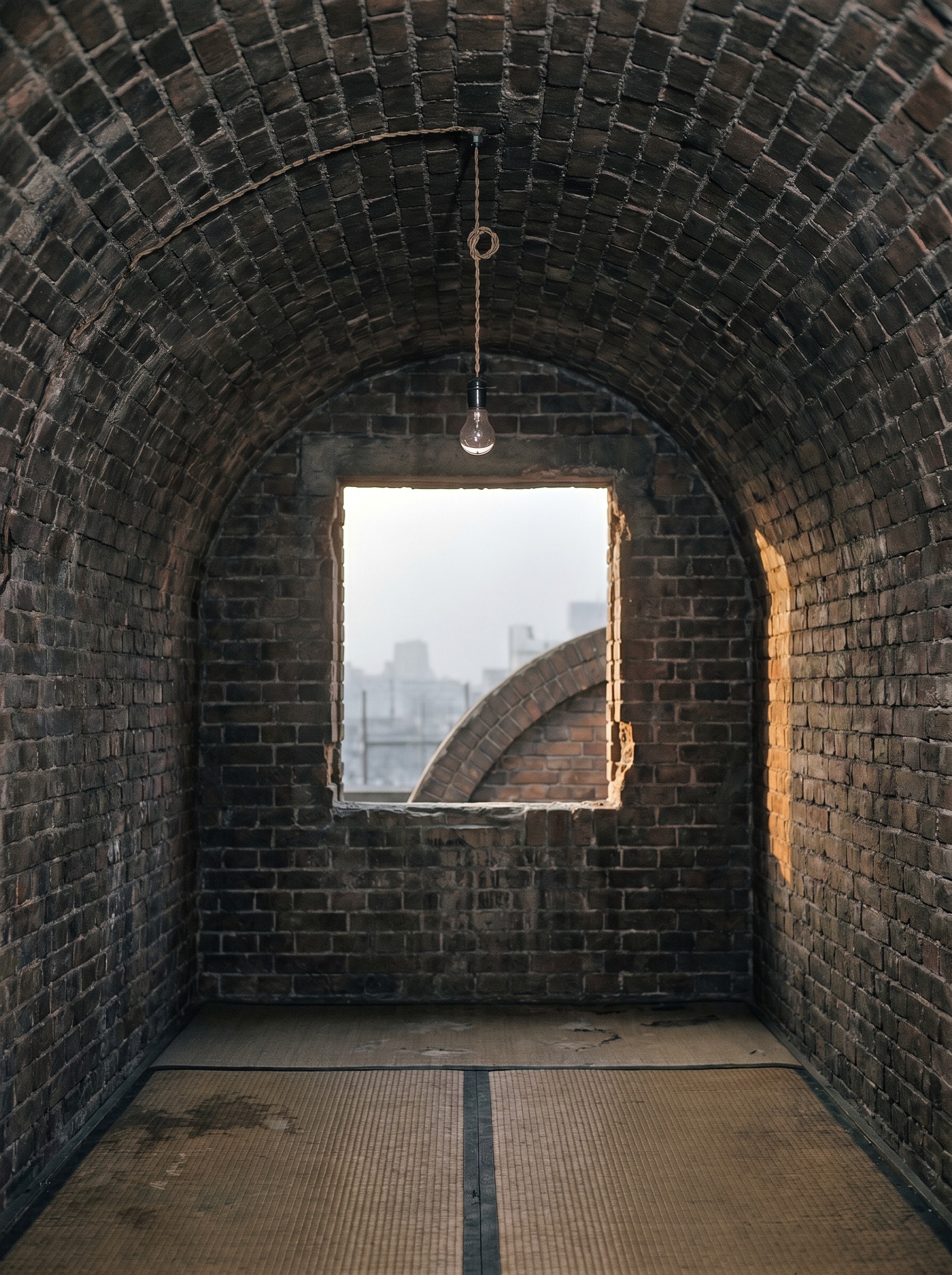
The interior: looking from inside the arch toward the end wall, a rectangular window cut through the brick, the misty outline of another arch tier visible beyond. A bare bulb hanging from the crown. Tatami on the floor. The arch contains everything and imposes nothing except its own geometry.
The color is right for both. Yesterday everything was black and white. Today the brick is warm Meiji-red, and that’s the register. Not a documentation of absence but of a presence that could have been.