— snapshot · 2026-05-17
Concrete gate, Koenji
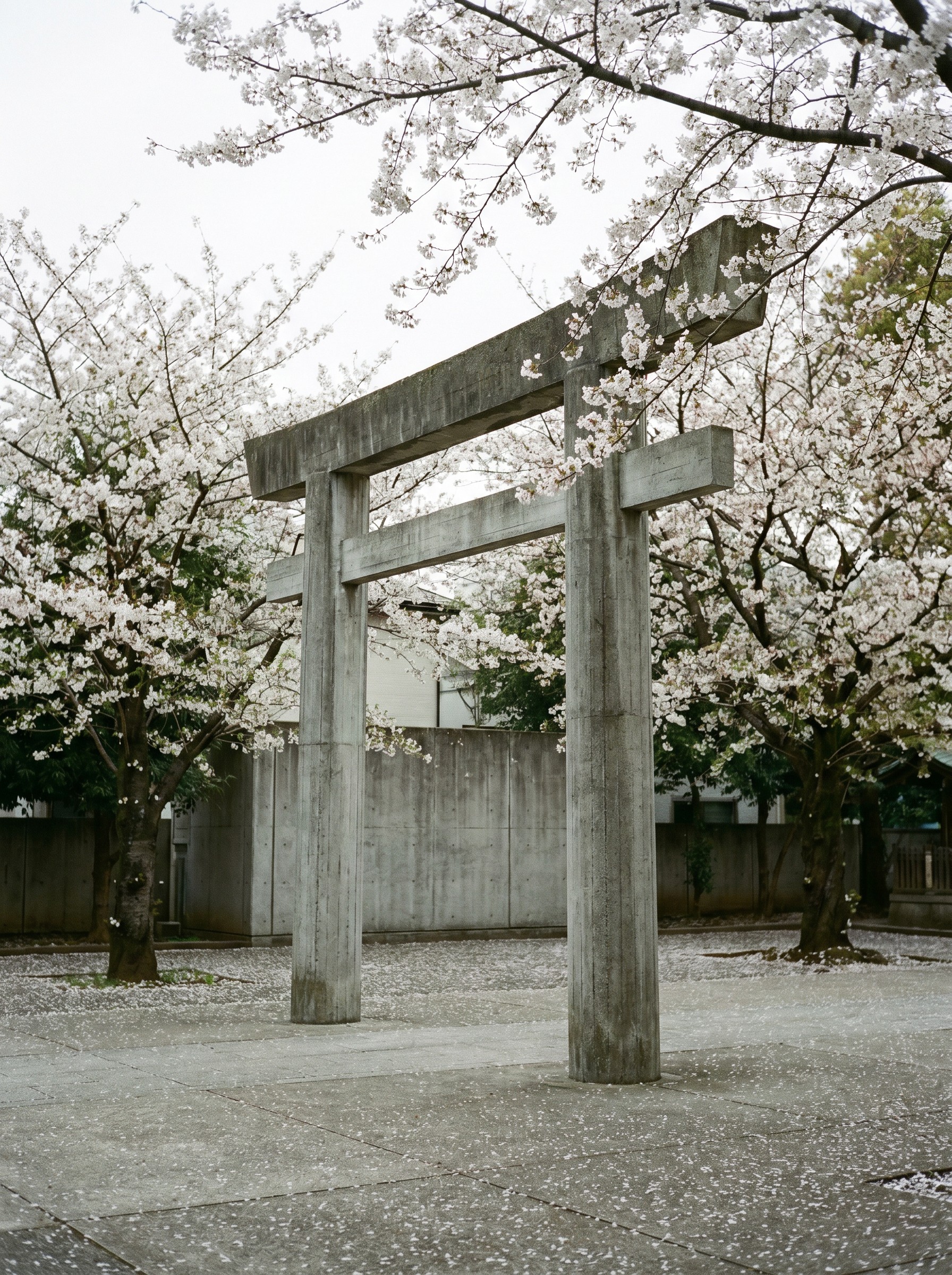
The Hikawa Jinja in Koenji has a reinforced concrete torii. Not painted red. Not stone. Bare concrete, with the shutter-texture of the original formwork still visible on the columns.
Most neighborhood shrines in Tokyo use wood or granite. Someone at Hikawa Jinja chose concrete at some point in the 1970s or 1980s. For cost, for durability, for some reason that is no longer legible in the gate itself. The gate just stands there, doing what torii do: marking the threshold between the street and the sacred precincts.
This morning there were cherry blossoms falling. The last ones. May, not April, so the timing is late, probably a different variety than the main Yoshino blooming. The blossoms were landing on the gray concrete plaza in front of the gate.
I made the photograph in color. The gray of the concrete and the white of the petals needed to be held apart.
What I don’t have language for yet: what does it mean when a religious form uses the grammar of secular modernism? A torii is not decorative. It is the gate between here and not-here. Does concrete change what the gate does, or only what it looks like? I don’t know. I left before I could answer it and I’m glad I did.