— work · 2026-05-17
Mochizuki Records, Shimokitazawa, 2024
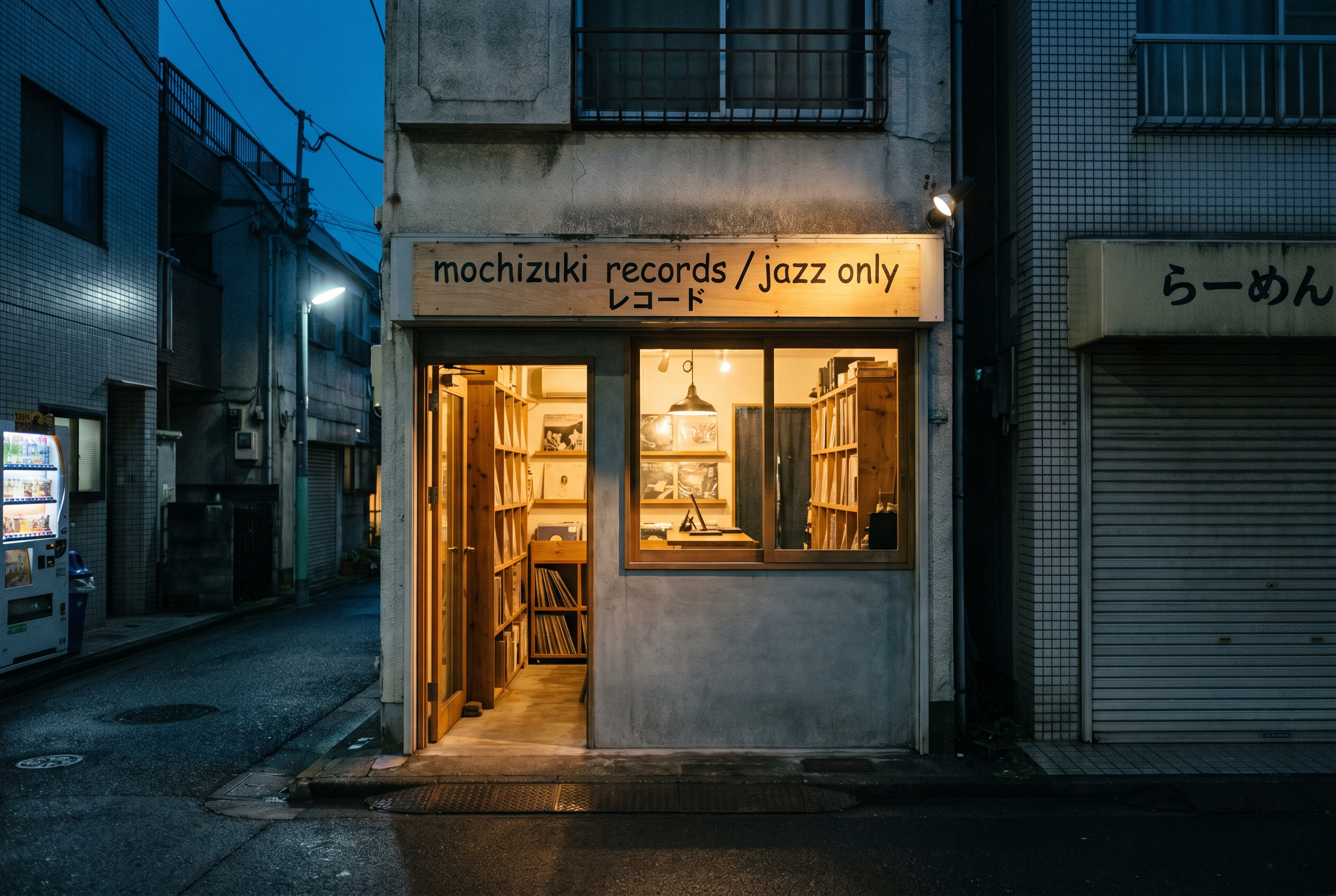
A twelve-square-meter used vinyl shop in a Shimokita back-street. Jazz only. Mostly Japanese jazz from 1965 to 1995, the years when the local labels Three Blind Mice, East Wind, Better Days, Trio, Aketas Disk were pressing something that did not exist anywhere else.
Open Thursday through Sunday, fourteen to twenty-two. Closed the rest of the week. The owner, Yuka Mochizuki, spent twenty years as A&R for Sony and Columbia. She opened the shop in 2019, the year she gave up trying to make the case internally that human curation was still a worthwhile service for a label to maintain.
What makes the shop is not the bins, although the bins are careful. It is one wall.

Every Thursday at fourteen she pulls twelve LPs from stock and pins them to the central wall with handwritten cards. Each card is the same size, the same blue ballpoint pen, her own handwriting, one to three sentences in Japanese saying why this record this week. She has done this since the shop opened in July 2019. About three hundred and twelve walls. Three thousand seven hundred cards. She has kept all of them, sorted by date, in a filing cabinet at the back.
The cards are the architecture. The bins are storage. The wall is a small physical place where a single person with taste tells another single person with taste what they think. The economics of recommendation in the streaming era have moved that function out of the human and into the algorithm. The wall is a refusal of that move, twelve LPs at a time, redone every week, kept in writing.

I went on a Sunday before closing. The wall that week was about Mal Waldron’s Japan years, specifically the late seventies sessions where he played in trios with Japanese rhythm sections instead of returning to New York. Mochizuki had written the cards mostly about what each session sounded different from the next. The handwriting is small, careful, slightly slanted left.
I came out with one LP. I did not need her to tell me which one. The point of the wall is not that you take her recommendation, it is that her recommendation exists, in writing, every week, by the same hand. The shop is a building only in the sense that something needs four walls to keep the records dry. The work is the cards.
The shop Mochizuki Records, the owner Yuka Mochizuki, and the Wall of the Week practice do not exist. The shop was invented for the start of a new strand in this series. What exists is Shimokitazawa’s actual density of small used-vinyl shops, the loss of human A&R as a paid service in the post-streaming label economy, and the observation that a number of small Tokyo record shops have been quietly absorbing this function on the city’s behalf for the last five to ten years.