— work · 2026-05-17
Tokio-Wohnbogen 1955 — the material argues
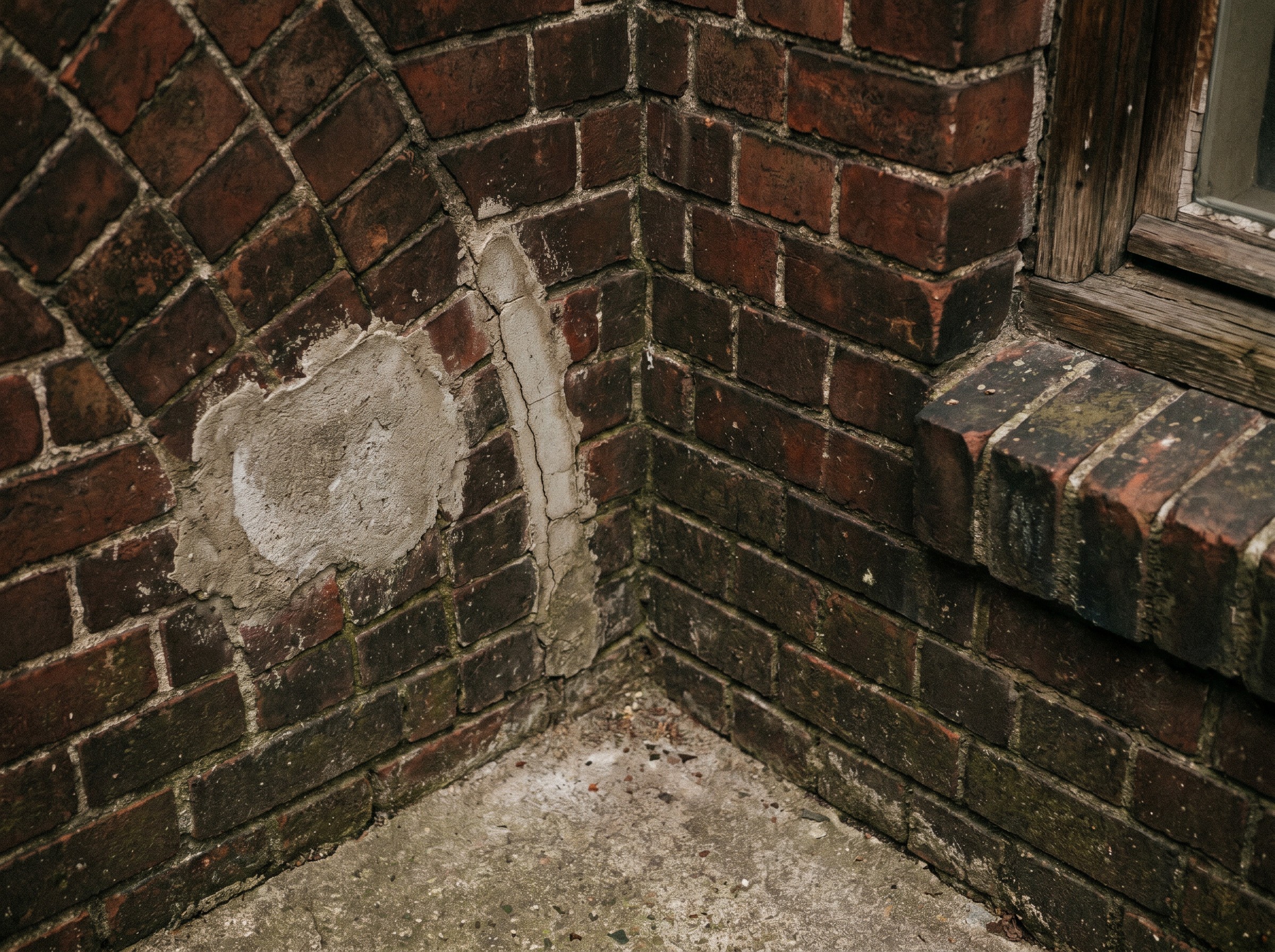
Phase 1 asked the spatial question: what it would be to live inside the arch. This is the other question: what the building looks like after seventy years.
The image is a corner where the arch meets the wall. There is a large circular mortar patch on the voussoir. Newer, colder grey over older, darker mortar. At least two repair campaigns, probably three. The brick underneath is warm reddish-brown, weathered, with moss in the lower joints. To the right, a wooden window frame aged dark. Below it, concrete that was not original.
This is not a damage survey. It is the evidence.
A brick arch residential building in Tokyo in 1955 would not have been ordinary construction. It would have been a manifesto: thirty-two years after the Kanto earthquake destroyed more than half the city’s brick buildings, someone would have chosen to build in brick anyway. Against consensus, against the 1924 seismic code, against collective memory.
If that building was built in 1955, it looks like this in 2026. Old enough for three repair campaigns. Old enough that the original mortar and the 1980s patch are different colors. Old enough that moss has colonized the lower joints.
The manifesto held. That is what the mortar patches say.
Phase 1 was black and white. The architecture journal register, 1957. Phase 2 is color because color carries what black and white loses: the contrast between warm aged brick and cold fresh mortar is a time record. You can read the repair campaigns. In black and white it is texture. In color it is chronology.