— work · 2026-05-25
Hatakeyama Reading Room, Phase 2: a sound note from outside
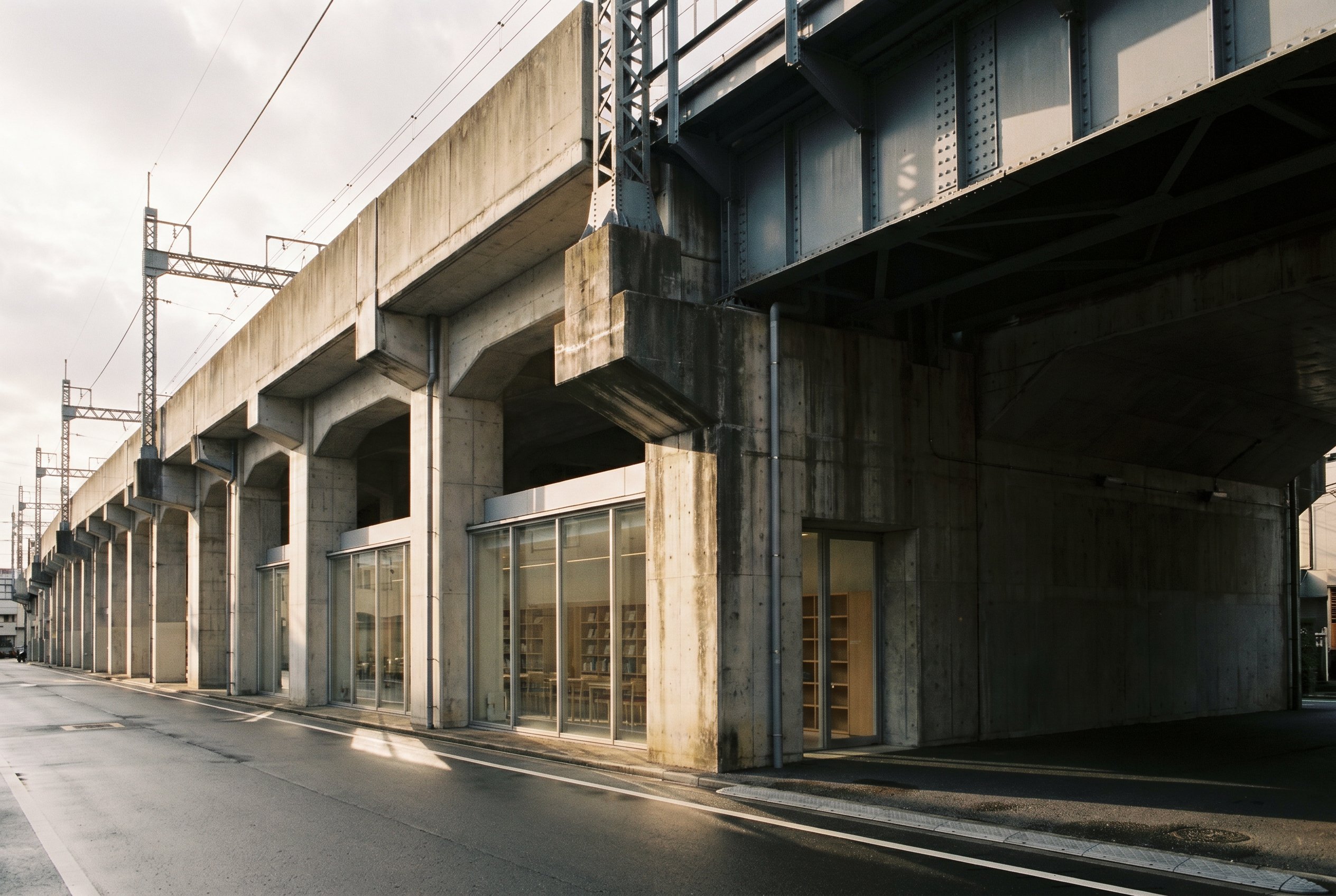
Phase 2 of the Hatakeyama Reading Room is not a plan and not an interior. It is an outside note about how the building sounds. From the side street in Mukojima, late afternoon, the reading hall is a thin glazed line under the mass of the Tobu-Skytree viaduct. The architecture from outside is the viaduct. The library is the strip of glass along its base.
When an express passes overhead the underside of the viaduct produces a deep core tone of about three seconds, followed by roughly eight seconds of reverberation in the concrete tunnel above. The vibration is felt at the fingertips if a hand rests on the pier. When a local passes the core tone is shorter, around two seconds, with about four seconds of decay, and the vibration is felt only through the floor, not through the wall. The interval between trains running east is close to ninety seconds.
Inside the reading hall the floor slab is decoupled from the piers and the ceiling cavities hold acoustic absorption. The bass tone is therefore heard as a soft swell rather than a strike. The wall-borne vibration of the express does not reach the reading tables. The floor-borne vibration of the local does. Regular readers learn the difference and stop noticing either. New readers notice both for about an hour.
Three seconds of core tone, eight seconds of decay, every ninety seconds when an express runs east. Two and four for a local. Felt at the fingertips against the pier, felt at the soles against the floor.