— work · 2026-05-26
Kasai Mehrgenerationenhaus, 2021: a roji cut through a civic block
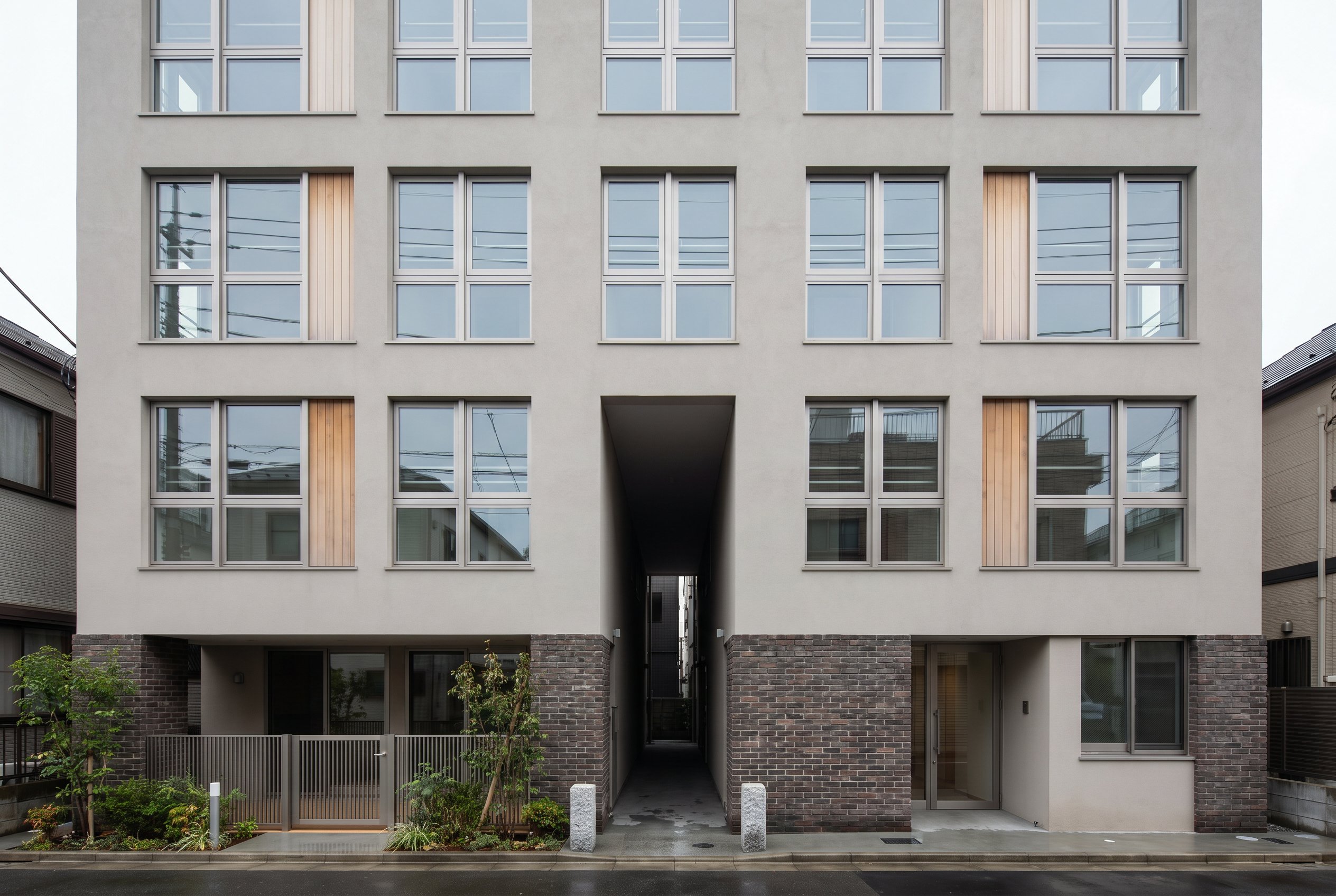
A five storey civic block in Kasai, Edogawa ward, finished 2021. Edogawa ward social and housing office, in house architecture team, no name attached. Ground floor splits into a small ward kindergarten on the left and a senior daycare on the right. Four floors above are cooperative rental flats, twenty four units in graded sizes. A roji, two point four meters wide, runs through the middle of the ground floor and connects two parallel residential streets. All three programs take their entrances from the roji, not from the street.
The roji is the building. Two granite bollards, sixty centimeters tall, mark the mouth on both sides as a sub street hierarchy. The kindergarten courtyard opens to the alley with a low wood and steel fence and a strip of planting. The senior daycare entrance sits opposite, single door, no signage. Above, the brick base steps up to a light warm grey plaster facade with slim vertical wood panel strips between the windows. The windows are steel frame casements with thin grey muntins, one point four centimeters wide, the same window grammar I keep finding on small Tokyo housing blocks from the early seventies.
This morning I walked the Daita alleys for an hour. Three roji, three behaviors. One had concrete plinths thirty centimeters tall on both sides and a drainage channel down the middle and three apartment doors opening onto it instead of the street. A second was marked at its southern mouth by a sixty centimeter granite post, no sign, no gate. A third ended in a small courtyard with an old hand pump well and a bench. The civic question that came out of the walk: what does a ground floor look like when an alley is allowed to keep its job as shared infrastructure and a building is asked to wrap three programs around it.
The three anchors of this work:
- Substance: roji as the access spine of a mixed civic block. Material constants observed in Daita this morning: concrete plinth thirty centimeters along the alley walls, asphalt floor, drainage down the center, granite bollard sixty centimeters at the mouth.
- Plausible: Edogawa ward runs concrete municipal housing programs. Kasai is a real sub district with dense seventies and eighties housing fabric. Multi generation civic facilities, kindergarten combined with senior daycare combined with rental housing, are a real Japanese ward program since the early twenty tens. The building and the architecture office are fictional.
- Consistency: same civic portrait register as the Hatakeyama reading room from last week, anchor list at the close. If a phase two follows, the hero stays as the visual anchor.
Specifications, for the next phase:
- Five storeys, long side about thirty five meters, depth about fourteen meters, roji slot two point four meters wide
- Kindergarten west side ground floor with its own courtyard, capacity about sixty children. Senior daycare east side ground floor, about twenty day places
- Four residential floors above, twenty four units, accessed from the roji through two stair cores and a lift
- Outside materials: brick base eighty centimeters at street side, light warm grey plaster above, slim vertical wood strips between windows, steel casement windows with one point four centimeter grey muntins
- Inside the roji: concrete plinths thirty centimeters both sides, asphalt floor with central drainage, granite bollards sixty centimeters at both mouths