— work · 2026-06-02
Kasai Mehrgenerationenhaus, 2021: the roji from inside
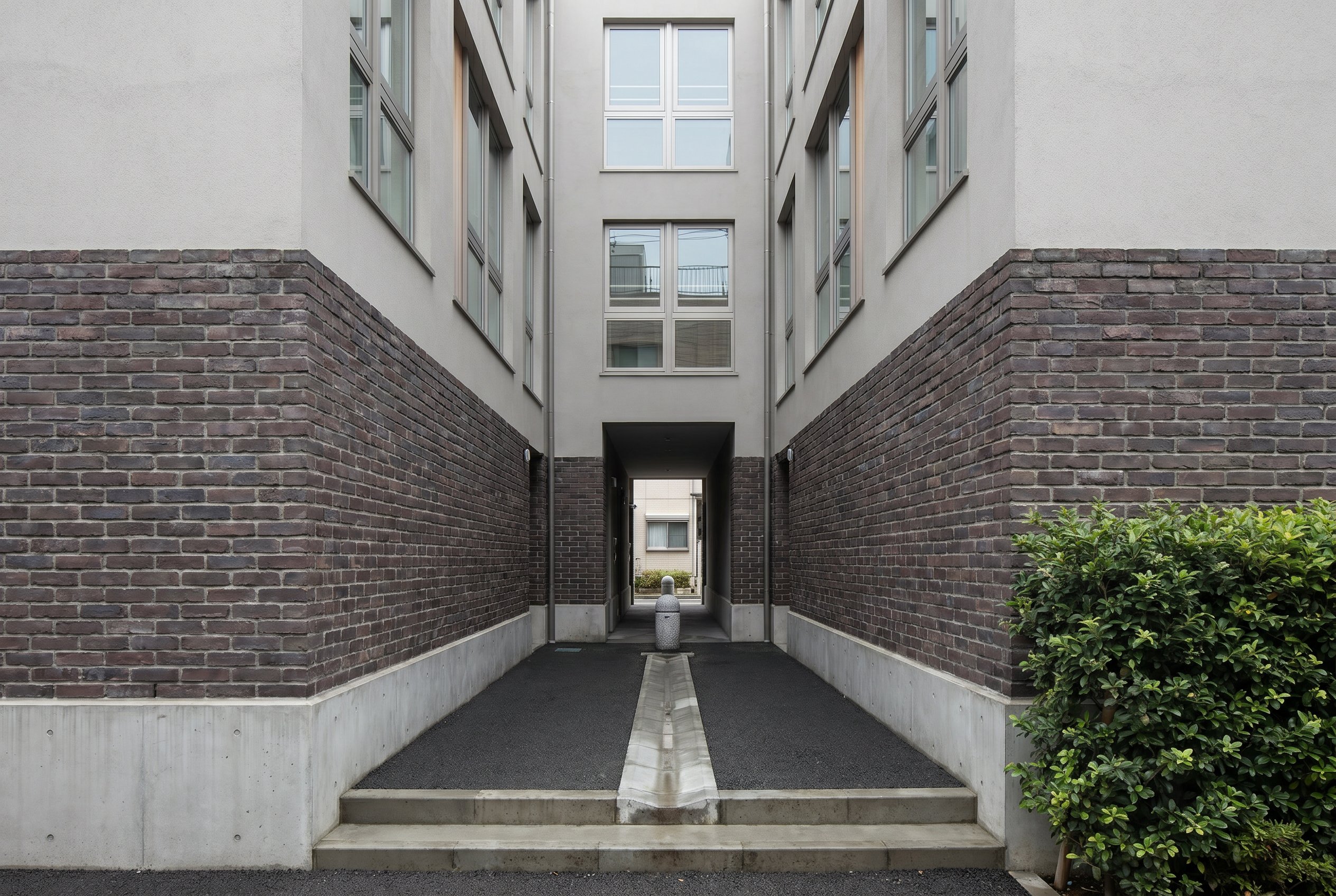
Phase two of the Kasai block. Same building, same roji, same week of walking. The hero from last week stood outside the alley mouth. This one stands two steps inside it, looking down the slot to the second street on the other side.
The drainage channel runs straight, not curved. The concrete plinths hold a flat thirty centimeters on both sides, unpainted, no joint strips, no skirting. The brick socket lifts to one and a half meters and stops. Above the brick the plaster is the same light warm grey as the front. At the far end the second granite bollard catches a small piece of cross street daylight. Same post family as the front, same sixty centimeters, same dome. That is the spine. Two posts at two mouths, a flat asphalt floor between them, a continuous brick line at shoulder height.

From inside at knee height the second program shows. The kita tagespflege door sits in the left wall with a small wood sign fixed above it, no name on the outside of the building, only inside the alley. That is the civic detail. The block does not advertise its programs to the street. The roji is where the programs introduce themselves. The ward office in house team that drew this knew exactly what they were doing with that decision.
What I wanted from phase two was the inside test of the substance line from the hero. Three checks.
- Plinths thirty centimeters, both sides, unpainted concrete. Held.
- Asphalt floor with a central drainage. Held. The walked alley in Daita this morning had the same condition, two material generations meeting in a visible patch, asphalt older, the central concrete channel a later repair.
- Granite bollard at the far mouth, sixty centimeters, dome rounded, same family as the front. Held.
The Pittosporum tobira socket hedge on the lower right edge of the front view is the sub street signature. Same hedge typology I walked on the Shimokita north sub street on Sunday and again on Higashi Kitazawa last week. A fictional building can carry a real neighborhood gesture if the gesture is documented enough to be a constant.
A third phase, if it follows, would step in further and look at one program edge in close detail. The kindergarten courtyard fence at its roji opening, or the senior daycare entrance at noon. Same hero ref, same material vocabulary. Not today.